Thirty years after first opening, the North Carolina Museum of History (NCMH) is planning for a nearly $200M renovation and expansion. In the museum’s words, the renovation will “usher in a new era, with reimagined exhibits and interactive experiences that offer deeper insights into North Carolina’s vibrant past.”
In order to ensure that these new exhibits reflect the rich and varied history of North Carolina, NCMH leadership brought on Brocade Studio in 2024 to lead a statewide community engagement process. Working with the museum’s curators, this team traveled around North Carolina, holding listening sessions where people talked about the history that matters to them and how they would like to see it shared at the museum.
At the outset, we worked with NCMH staff to define engagement objectives, identify guiding questions, and develop a list of key contacts. The first wave of engagement during the early summer focused on virtual interviews and small group conversations with these key contacts around the state—mostly historians, archivists, librarians, museum professionals, advocates, educators, community elders and elected officials.
Later in the summer, we—along with curators—engaged a broader network of people, meeting virtually with religious leaders, community organizers, businesspeople, teachers, artists, authors, farmers, chefs, craftspeople and many others who shared a wealth of knowledge about their communities. Some conversations were focused on the history of a particular place, while others brought people together around a broad topic like creativity or education.
For the third and most extensive phase of engagement, the team hit the road, travelling around North Carolina to hold in-person gatherings in parks, rec halls and libraries across the state. These included open-topic, open-call public events as well as sessions focused on particular community histories and specific topics like Civil War history, craft, food and farming. The team also visited museums, historic neighborhoods, and cultural sites like the Nascar Hall of Fame and the Charlotte Hawkins Brown Museum to learn more about regional stories and talk with staff at each about their experiences working in their communities.
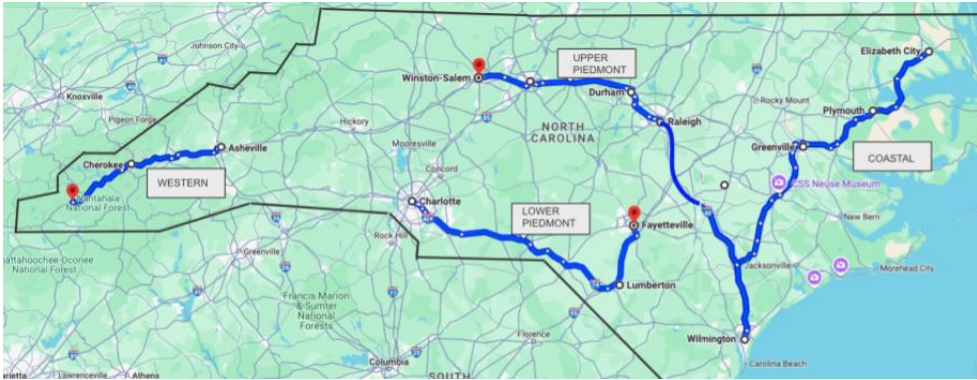
During this phase, the team travelled to western North Carolina, where they hosted a week of in-person conversations in Asheville, Cherokee, Andrews, Old Fort and the Pisgah Forest, just two weeks before the area was devastated by Hurricane Helene. They also travelled down the coast, visiting Elizabeth City, Greenville and Wilmington. And they took trips to the Upper and Lower Piedmont, holding sessions in Charlotte, Pembroke, Red Springs and Fayetteville and Durham, Winston-Salem, Greensboro, Gibsonville, and of course, Raleigh.
In total, the museum held 63 virtual and in-person engagements, hearing from a total of 240 people across the state. Whether talking with people online or in-person, the approach throughout the process was to “go deep.” Instead of making brief contact with as many people as possible, the team focused on small group and one-on-one conversations that began from open-ended questions and followed the topics participants indicated were most important. While each engagement session was tailored in this way, all were guided by a few overarching questions:
2024’s four-month sprint laid the foundations for meaningful connections between the history museum and North Carolina’s many communities, but these connections will require sustained and consistent follow up by the museum to have long-term impact.
In the second phase of our work together, we developed strategies and tools to power NCMH’s ongoing community engagement. Informed by what we heard from community members, this “tool kit” includes guidance on maintaining relationships, designing and administering surveys, promoting community events, gathering feedback, and collaborating with communities to create exhibits.
Have a complicated problem and need someone who can get you to a new place?
Intractable problems require inventive approaches.

